Anecdotal Preface
27 July 1994. 12:00 p.m. Wednesday demonstration #150.
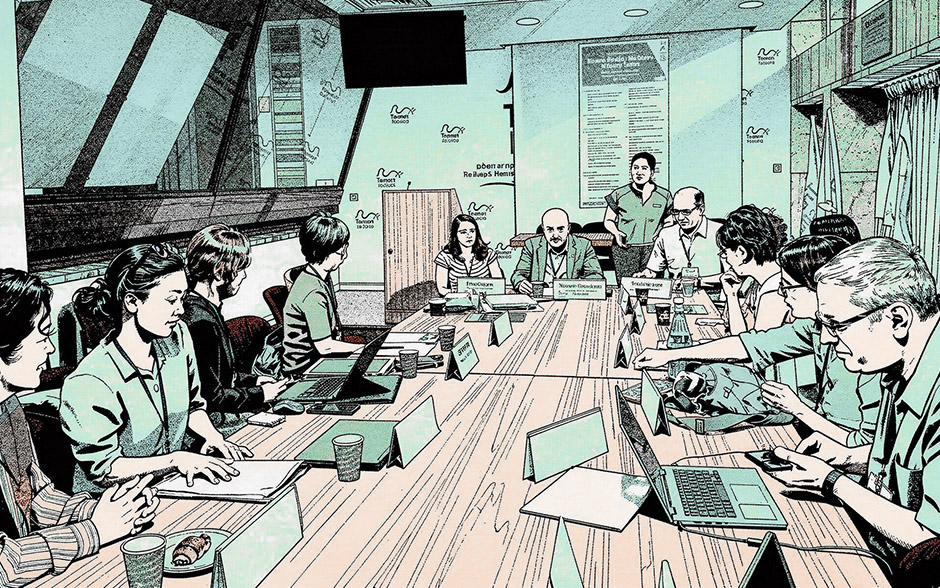
I am standing, amongst 50 to 60 women, young and old, in front of the Japanese Embassy in Seoul. In front of me, a line of young, uniformed men barricade a metal shield covering the 50 meter gateway entrance to the Embassy. In front of them, a line of former "comfort women," who barely reach the top of the shields, are facing the men, shouting, screaming. Against the Japanese government that has not recognized and compensated these women's enforced sexual servitude during the Pacific War.
In numbered order, the 150th consecutive demonstration by the Korean Council and the former "comfort women," today's particular protest was held directly in front of the gate of the Embassy, not across the street, where the demonstrations are usually held. Due to the proximity between the protesters and guards and in light of the one and a half year's worth of demonstrations, not to mention the unbearably humid 110° weather condition, today's protest was more intense and emotionally charged.
Little by little, the uniformed men began to step back across the street to maintain the distance, but each very slow step only came with a tremendous amount of resistance. There was great tension at the gate, and the halmuni tried to push against the police shields and pull them aside. After a while, the older women, and I, were forced back to our original place of protest.
This was, for me, an experience that demanded my only taking a step back to rethink the bounded spaces and represented ways in which I had been raised. We thought to have remained.
Introduction
On 14 August 1991, Kim Hak-sun, the first former Korean "comfort woman" to present her public testimony, broke the dam of silence and unleashed what would become a flood of controversy surrounding the "comfort women," drafted for military sexual slavery by Japan during the Pacific War (1931–1945). Since then, the question of why the former "comfort women" would talk about these experiences — now, over 50 years after the fact — sparked a curiosity and drove research efforts that eventually led to the Republic of Korea, where the author spent a summer speaking with former "comfort women" themselves and with scholars and activists in the field.
Currently, as scholar Alice Yun Chai argues, a strong and supportive global feminist coalition, especially within the Asian-Pacific region, has played a large part in bringing this issue to the forefront. As scholar Chungmoo Choi states, there is a system at work involving the oppressive practices of Confucianism that has prolonged the silence of the former "comfort women."
The task force and individual researchers have unearthed information answering some of the questions concerning the conditions of this particular practice, and scholars have drawn attention to the historical context surrounding the practice of military sexual slavery. The focus of this study is the halmuni's testimonies — what motivated them to come forward and to give their oral and public testimonies.
I will argue that the former "comfort women's" resistance represents a form of reclaiming a womanhood, a personhood — that their last means of seizing and maintaining human dignity and self-worth was through their testimonies. I see their resistance as their way of giving meaning to their lives, of retrieving for themselves a sense of recognition. Whether by governments and societies or not, their forms of resistance are central to understanding who they are.
According to findings at the time, as many as 200,000 women were drafted for sexual slavery, approximately 80% of whom were Korean. These brothels existed in China, Hong Kong, French-occupied Indochina, the Dutch-occupied islands of Java, Sumbuwa, Surawest, Burma, and the Pacific Islands of New Britain and Trobriand, as well as Korea and Okinawa and Ogasawara Islands in Japan. Those forced or recruited to work in these stations included Korean, Taiwanese, Chinese, Filipino, Indonesian, and Dutch women.
Methodology: Complications with Oral History
Several important methodological questions arise concerning the use of oral testimony as primary source. The construction, interpretation, and (in this case) translation of oral histories posed a great challenge, as all testimonies were originally written in Korean and translated into English. Beyond the language, numerous inconsistencies and flat-out contradictions within different versions of the written testimonies of the same women raised doubts.
The inconsistencies I found from the varying versions of the same person's story — in the written form, not to mention about 25 different women's testimonies, many of which I have two or more copies — brought doubt not only to the credibility of the primary sources but also to my own intent: when relying on such a subjective and questionable source in oral testimony, how could I write a convincing paper validating their words and the "reality" of their memory?
Drawing on the parallels of Holocaust survivors' testimonies, I begin with the question of time and memory. Lawrence Langer, a specialist of the Holocaust experience, explains that time has passed and the historian does not trust a memory in which the past has begun to blur and which has been enriched by numerous images since the survivor's return to freedom. Another aspect of the problem with testimony and memory is the abstractness of a recovered truth and the concreteness of an experienced moment.
The many "truths" reflect the several currents that flow at differing depths, respective of each person's understanding. It is indeed these many currents of memory that challenge the existing understanding of history and work to destabilize existing mentalities. Witnesses in the testimonies do not search for the historically correct version of events — they are concerned less with that past than with the present. They generate narratives less predisposed to remind us of what was, and more inclined toward a self-consciously represented reality.
With my project, however, there are several layers of mediation involved. In the case of the "comfort women," there is the interpretation of the interviews, the translation from Korean to English, and finally my own evaluation and use of the halmuni's words. Although I agree with the general concept that it is impossible to "bring down" the memories of the Holocaust to the human realm, I feel that the layers of mediation are unavoidable and occur with any raw data or archival material. My concern about the "reality" of their memory or the veracity of their words, thus, became focused upon the mediating character of one's work.
I will conclude with one final note. It may seem that these women's experiences, the violence, the barbarity, and the brutality, are beyond words. Indeed, the halmuni's oral testimonies, because of this challenge, will always take on and will always require more imagination and energy to reassess or evaluate the various mediations in the attempt. Penetrating the comfort zone of silence and disregard is there, and the choice is left open. The very person who testifies in order to make people aware appeals at the same time to silence — yet they have come forward and given public testimonies because the notion of the inexpressibility does not justify silence.
Female Subordination During the Pre-Colonial Period
In order to examine part of the rationale that worked to maintain the "comfort women's" prolonged silence, shame, and dishonor, it is necessary to give context to the Confucian ideology which was established during Korea's modern era, the Yi dynasty, also known as the Chosŏn period (1392–1910). It was during this time when the foundation of the male-dominated socio-economic, political, and cultural structure was established. This historical context is necessary to set the grounding for my discussion of the Korean woman's subordinated status under a male authority.
The Colonial Mentality: Sadae Juŭi
During the Yi dynasty, Confucian ideology was widely practiced, and it established the social, political, and economic practices in Korea. Accordingly, the absolute authority of the first monarch, Yi Sŏng-gye, otherwise known as T'aejo ("grand progenitor"), was a Chinese concept subordinated to the Chinese emperor. This orientation characterized Korea's foreign policy and dependence upon their good will and protection — sadae juŭi, meaning "serving the great." The structure endured for 518 years, and the ideology would continue for much longer, influencing Japan's colonization and the U.S. occupation.
"Virtuous" Ideals of Confucianism
The change in the dynastic cycle from the Koryŏ dynasty (918–1391) to the Yi reflected not only a shift from the practice of Buddhism to Confucianism, but also a fundamental change in modulating women's behavior. Yi administrators criticized the "loose morals" of Korean women during the latter part of Koryŏ's rule. In 1432, the Yi government published Samgang Haengshil-do (The Three Principles of Virtuous Conduct), a book replete with exemplary cases of "virtuous women" which would serve as a guide to all Korean women. Then in 1475, Queen-Consort Sohye compiled Naehun (Instructions for Women), an influential textbook for women covering four areas: womanly behavior, moral conduct, proper speech, proper appearance, and womanly tasks. From 1392 to 1485, these Confucian virtues were encouraged, resulting in a more legal, systematic control of women.
The "virtuous woman" ideal, established by law, espoused the overwhelming rules of what women were and how they were supposed to act. Women did not have names — they were identified by their position relative to men. Before marriage she was so-and-so's daughter; after marriage she was so-and-so's mother. Only the name of her husband's family (sumang) was entered in the registry. Even in the registry of the son-in-law, only the name of her own family was recorded. A woman's life was controlled first by her father, then her husband, and finally by her son.
The rules of the Yi dynasty also believed that the disorders of the Koryŏ period were in part due to women's frequent social outings. "Inside" and "outside" meant that the woman's role was confined to the household, while her husband would support the family from the "outside." Interestingly, one word for wife was anae, meaning "inside person," and if the anae committed adultery, the husband should be punished — if the family head was found guilty of a major crime, the whole family bore the consequences.
Above and beyond all of these rules was the most significant and symbolic "virtuous" ideal: that of chastity. One scholar, Chungmoo Choi, describes the latter as "patriarchal ideology dressed up as Confucian morality, which demands that a woman's chastity be claimed only by her legal husband." Traditional Korean women were taught to believe that the loss of chastity was worse than death itself. One scholar continues: one reminder of the way Korean men have controlled women's bodies is the miniature dagger (changdo) dangling on a string of tassels. By wearing the dagger, the gentlewomen claimed both high fashion and moral virtue — use the dagger to take her own life in the event that her body was even touched by any man other than her husband.
Sacrificing one's life in order to protect one's chastity is by no means a passive action, and many of these "comfort women" did kill themselves. For those who never did, the testimonies and their morally stigmatizing past would have ascribed them into social purgatory. Thus, one factor that worked at the "comfort stations" in order to maintain their "virtuous" ideal of chastity was this: while they may have resisted at the stations, when they re-entered their own country, they had not committed the ultimate act of sacrificing their lives in order to protect their chastity. Rather than going through the main gate without such honor, many of the women entered from the outside, through the ch'iksa (a reception area for servants at the entrance of a traditional Korean home).
Why the "Need" for "Virtuous" Women
The oppression is amplified in light of the paradox that the patriarchal ideology ironically disregarded these same ideals in order to shield their men — to save a brother or father from being conscripted for war. In either case, the system which gives men the legal and social power to "represent" and to exploit women is what is at the core of the chŏngsindae issue.
One historian would argue that women's vulnerable disposition was created because men saw women as powerful and dangerous. In China, the cults of footbinding, chastity, and the "virtuous women" ideal were men's reactions to women's resistance or aggressive behavior to economic necessity, and to the urbanization and industrialization of the late 19th century. There is the common fear of losing a privileged social and economic status enjoyed from the benefits and rewards via exploitation and oppression.
Historical Legacy of Female Tribute and Sexual Slavery
The "virtuous" ideals of chastity, discipline, and self-censorship (symbolized by the ornamental dagger) was part and parcel of the "comfort women's" silence. Korean women's self-censorship has had a long historical legacy. There has been a continuous practice of objectifying women's bodies and thinking of them as material tribute for military expansion from time immemorial.
Korea's own history can be written in terms of its continuous foreign invasions, and with each invasion the "continuity" was this: Korean women were taken as sexual slaves or material tribute in order to pacify and serve their military potent neighbors. For the women of the Yi dynasty, the "virtuous" ideal of remaining chaste even at the cost of one's life caused a tremendous amount of self-sacrifice during the Japanese (Hideyoshi) invasions of 1592. The aid of the Chinese (Ming) army played an important role in ending the seven-year war. However, there are records of Korean women being raped not only at the hands of the Japanese military but also by the Chinese soldiers who supposedly came to defend Korea. Many women committed suicide in order to avoid such dishonor.
There were also two Manchu invasions known as the Ch'ŏngmyo Horan in 1627 and Pyŏngja Horan in 1636. In both, Korean women were taken as captives. After the wars, Korean women managed to return to Korea only after paying a high ransom to the invaders, but return was not welcomed because families assumed that these women had been "dishonored" and/or "used." This precedent — that returning women were treated as damaged — created the historical legacy of Korean society's rejecting women who had been in the hands of foreign occupiers.
Colonial Period and the Ianshō ("Comfort Stations")
"Dark Ages" (1910–1919)
With the ideological and historical context of women's submissive and subjugated status in mind, I enter into the colonial era (1910–1945). Before I present the "comfort women" system, an understanding of the historical conditions is required. During the colonial era, the "great" is continued — but this time, the "great" is alluding to Japan.
The specific circumstances of Japan's colonial administration shed light on how the practice of enforced sexual bondage could be carried out on such an institutionalized magnitude. Japan's victory in the Russo-Japanese War of 1904–1905 marked the first defeat of a western power by a non-western nation, thus strengthening Japan's political and strategic basis in its imperial pursuits. The Protectorate Treaty made Japan's annexation of Korea official on 22 August 1910.
As censorship and suppression were fierce, but nine years of such maltreatment culminated with the March First movement of 1919, where students, professors, workers, and citizens galvanized to protest the colonial regime. Influenced by Bolshevism, but more importantly, heeding the idealist calls of Wilson's "Fourteen Points" which emphasized national autonomy and self-determination, demonstrators paraded throughout the country shouting "Long live an independent Korea." This peaceful protest sparked a nation-wide uproar in the ensuing months in which over one million people participated.
"Cultural Period" (1920–1931)
Under the new leadership of Admiral Saitō Makoto, the "cultural period" (Bunka Seiji) was born — attempting a so-called "renaissance" to gain internal consent of the Korean people. The overall policy, though, remained the same: the colonial state and bureaucratic apparatus forced the Korean people from the native Koreans, either by accommodating towards the Japanese or feeling alienated and rebelling against the colonial authority.
"Cultivation" for Mobilization and War (1931–1945)
A new phase of colonial tactic would arise as Japan recovered from the world depression and dealt with the Chinese threat to its continental interests. This created the backdrop for Japan's invasion of Manchuria in 1931. Subsequently, this led to the formation of the "cultural period's" end and the dawn of forced assimilation (Shi gaihō), the destruction of the Korean communist party, and the repression of a united front.
This "cultivation" was for the preparation of what would become a mass mobilization of the vast Pacific. The Naisen Ittai movement — loosely translated, "Japan and Korea as One Body" — emerged as what became the most infamous and ignominious colonial policy, crucial to Japan's war machinations. This required "transforming" the Korean people into imperial subjects: attending Shinto religion, following Japanese holidays, changing the imperial oath, attending education in Japanese language only, and the humiliating and degrading sōshi-kaimei — adopting Japanese names.
Simply stated, in the last years of Japanese rule, Korean society had all but perished under war mobilization and political repression. The prisons were overflowing with thousands of political prisoners; millions were uprooted from their homes; food rationing had dwindled; party and all objects were appropriated for their silver content; and Korean language publications had disappeared. On 15 August 1945, Japan finally surrendered after the atomic bombing of Hiroshima and Nagasaki. It is within this colonial historical context when the recruitment of the chŏngsindae took place.
Creation of the Ianshō
Origins and Expansion
With the mass mobilization efforts of the early 1940s in mind, I take a step back to review the specific conditions under which the ianshō ("comfort station") system originated. Lieutenant-General Okamura Neji, the Japanese Army commander of China, admitted to being the one who set up the first official ianshō in Shanghai, 1932. He stated that long ago there were no "comfort women" — because of two or three cases of rape, the army requested that a unit of "comfort women" be set up. The Japanese government's initial statement was that the army had no role in the matter. Yet, despite his bold disclosure, Okamura was wrong in two of his assumptions. First, the system was not created in reaction to the 1932 Shanghai Incident. Rather, Japanese military leaders had learned a "lesson in war" in August 1918, when the troops experienced a rampant spread of sexually transmitted diseases from Russian women who were raped by Japanese soldiers in Siberia. Second, the system was documented in Japan and Korea well before Okamura's stated date.
Substantial evidence of the ianshō system exists. As Japan's full-scale war against China began in 1937, involving as many as 800,000 Japanese soldiers, a great upsurge of "comfort stations" occurred in Chinese cities. In 1941, as Japan declared war against the U.S., vast areas of Southeast Asia and Southwest Pacific became home to even more ianshō. Professor Yoshimi accordingly distinguishes four types: military-run stations controlled directly by the Japanese forces; privately-run stations (the most common) frequented by military forces; privately-run stations open to ordinary citizens though military priority was given; and privately-run brothels with no Japanese government affiliation.
Daily Life and Resistance in the Ianshō
The regulations of the ianshō were strict. Rules stipulated that entry was allowed to soldiers and military personnel only, a certificate permitting the visit was required, and the charge was fixed at ¥2 for soldiers and officers with pay of ¥5 permitted to stay overnight. The rules viewed the women as an "imperial gift" — "not trading in love affairs with the women, not laying any property claims over them, as they were public property."
Resistance was tremendous in the beginning. The kicking, yelling, screaming, hysterical youths were sexually violated as soon as they were captured, or at their first beatings. Many women discuss being trained to serve men and practicing how to use a condom. Escape was an especially popular form of resistance. However, strict restrictions to their mobility and the surrounding environment made it very difficult. One woman states that for the first two years, they were never taken out. In another building, ghosts appeared in the toilet at night — the rumor that prevented them from going there at night also prevented escape.
Kim Bok-Dong halmuni describes her constant moving — transferred from one place for two months to another, following the front line fighting. Hyong-soon tells of her desire to "expose the barbarism of the Japanese" with her story of escape: "In the beginning, they caught the girls who tried to escape and took them to a room in the basement. Then, they lined the rest of us up there. The soldiers beat them brutally, cut off their breasts and with a knife, sliced out their inner organs and threw them at us, saying, 'If you try to run away, this will happen to you.'"
In order to keep "sanitary" conditions and "healthy" women, these women received weekly check-ups and received regular injections of something called #606. Others stated that they never had check-ups, but after they became pregnant or contracted venereal disease, some soldiers brought tablets to induce a miscarriage. Some women refused to use condoms — as for the use of condoms, some soldiers thought they received a shot of #606 and would be protected.
Means of Mobilization
Contrary to notions that these young girls were thought of as "expendable" and contrary to the stereotype of the submissive Korean woman dictated by Confucian guidelines, there were various forms of resistance against their recruitment — not only from the young women themselves but also from the parents. According to the women's testimonies, the Japanese military recruiters found ways to coerce, kidnap, lure, or trick the women and their families. None of the testimonies in my possession describe being sent with the consent of their family members.
One testimony clearly refutes the "expendable" notion: when three servicemen came with guns to take the daughter, her father caught one of the servicemen, pointing to his own neck, crying: "Kill me before you take my daughter away." The serviceman pushed the father and attempted to attack — then calmed down and handed over a pack of cigarettes, explaining that the daughter would be able to go to school, acquire professional skills, and earn money.
To counter resistance against recruitment by Korean families, the Japanese soldiers had to use different ploys and tactics. A document entitled "Causes in the Recruitment of Workers for Military Comfort Stations" shows the attempt to gain internal consent by employing local people in the villages for the recruitment process. Yoshida Seiji notes the increasing use of deceit: "In a grazing field, we said to the shepherdesses: 'We are conducting a vaccination, all of you get into the car.'"
Fear and Intimidation
There were daily means of intimidating or placing fear into these women. Some were beaten when they refused orders. One woman spoke of an officer who gathered them in the yard and cut their neck with a sword, after which he thought it necessary to teach them obedience. The women were taken to a hole and forced to witness the execution of a captured Chinese soldier — the soldiers said, "we are showing you so you will become courageous," when the girls were in fact terrified.
Their Return Home
The surviving "comfort women" who managed to return to their homeland would encounter difficult times ahead. The Japanese soldiers suddenly disappeared, and the women survived raising fruit and sweet potatoes. As some of the 20 women had committed suicide, and the army did not inform them that the war was over — the happiest period, if I think about it now, was the time when we lived together, just ourselves.
The Korean halmunis have memories of doing work outside the realm of sexual slavery. As mentioned before, there was not a fine line delineating women's work during the war. When the war was ending, some planted potatoes and lived off these products. Throughout their time as "comfort women," the people who managed to care for these stations — some planted gardens, treated malaria wounds, gave injections, bound wounds, and stopped bleeding.
Mun Ock-ju states: "We wept that we had been able to return to their family in Taegu — she continues to say that when she returned home or out of joy or out of knowledge of her predicament. She continues: "I am not sure whether it is out of joy or out of knowledge." Mun Ock-ju who managed to return to their homeland would encounter difficult times ahead.
Japan's Rationale
After reading the words from the former "comfort women's" oral histories, it may be appropriate to highlight the different pictures one can imagine from the Japanese government's perspective. The language of military sexual slavery pervades the Japanese government's literature — "comforting" the soldiers, on one hand, and to "maintain discipline" on the other.
The military wanted to provide release from their everyday harsh lives sexually and psychologically, in order to maintain the morale of the soldiers who endured long periods of battles with little rest and relaxation. To some, the women were presented as "imperial gifts for the Japanese military." The Chief of Staff of the Japanese Army's Expeditionary Force in North China Division noted the following in his 14 March 1932 journal entry: "Lately, the soldiers ran about looking for women…the army recognized the necessity of setting up appropriate institutions toward the resolution of the soldiers' sexual problems."
From this psychological viewpoint, one could argue that a war mentality conflicted with the Confucian ideological precedent. In other words, the idea of complete and unconditional surrender of a soldier's will and life for the nation took away the authority and autonomy ordained him in a patriarchal society. For soldiers who were deprived of their independence, having sex with a woman was a chance to at least temporarily regain their autonomy — to become almost independent, and "free." The particularly aggressive and violent behavior demonstrated the day before going to the front lines became a pattern throughout the testimonies.
Post-Colonial Period to Normalization (1945–1965)
After the Pacific War, the victorious allied forces set up tribunals for the trials of Germany and Japan's war crimes. The international military tribunal at Nuremberg and the tribunal for Japan in Tokyo punished some war crimes. There was no trial, much less attention, given to the Korean women who were forced to be sexual slaves by Japan. However, the military trial of 1947 in Batavia/Java condemned one high-ranking Japanese officer to death for crimes involving military sexual slavery in Indonesia — the only case in which these crimes were prosecuted.
The conditions following the Pacific War resulted in Allied Occupation and financial support for both Japan and Korea. The U.S. had attained sheer economic supremacy, but the global trade imbalance — the "dollar gap" — meant foreign nations could not purchase American goods. Japan's recovery program was created for two reasons: to revive Japan as a functioning economic member and to prevent the Sino-Soviet world of communism from drawing it away from the rest of the Pacific region.
In Bruce Cumings's overview of the Cold War, he explains that the rationale for the "long peace" from the east-west bipolar world was sustained by a strong military design — not just about containment of the Soviet Union, but a "double containment" that both the U.S. and USSR agreed upon. There was a "double peace" from the east-west bipolar world that sustained the need for a strong military design. It was the Korean War that "came along and saved us," as Secretary of State Dean Acheson stated.
It is within this complex structure of American hegemonic desires and Japanese economic dependence upon both these countries for economic build-up which created the conditions for Koreans. The Confucian ideology and its structuring framework that was put into place within east Asia did not allow the past colonial injustices and sufferings of women to be heard, especially the topic of comfort women. Even if people cared and wanted this issue to be debated, Korea's geo-political position did not allow their concerns to reach the forefront of international concern. Finally, the post-colonial, socio-economic and political structure that was established in the Pacific rim also goes to explain why the Japanese government's previously published documents did not gain the popularity or attention they deserved.
Conclusion
An inquiry into why there was such a prolonged silence from the surviving Korean "comfort women" about their experiences as military sexual slaves under Japanese colonial rule has revealed the Confucian ideology and its structuring framework. The socio-economic, political aftermath in Korea's founding as a subordinate state in the Pacific rim also goes to explain why these women's voices were not heard for so long.
I have discussed how others view their disclosure, how I myself understood it. But here, in my concluding space, I want to allow some of the halmuni's voices to be heard. All speak from anger against the Japanese for denying their involvement and the need to tell the "truth." Their motivation ranges from anger at their humiliation, shame, and disgrace — yet, they speak. Their stories are out there, and their voices will flow.
However, even the sparse numbers cannot prevent my thinking that these women were brave, courageous, and somehow spirited enough to be compelled to break through the seams and cracks of their social strongholds and voice their untold histories. There is certainly a sense of empowerment for some to watch one another gain international attention, to travel to various parts of the globe to testify and shed light on the past. For me though, there is a significance and a compelling gravity — not because of the mass media attention or the empowerment they give to each other, but because they have not allowed their past to go unnoticed. They thought it important enough to voice their stories. They made the decision to go public with their dignity and their existence as women and as humans.
Their stories are out there, and no one can stop them.
In Their Own Words
Noh Chong-Ja:
I live in a rented room without running water or a toilet. The 40,000 won (about $500) rent takes up all my money — I get by on social security. But the 30,000 won and the 10 kg of rice we receive in payment is not enough. To be honest, I think of suicide. But until May, I have decided to tell myself that I need to endure, and erect a grave for my father who died away from home. Without a husband or child, I have nothing to fear, and I could not close my eyes, even in death, without exposing my shame and the loss of my reputation.
Kim Hak-sun:
I only want to say one thing to the Japanese government: even if we were paid ¥20 million for damages, we will not get back our past life. We hope this will enlighten the younger generation, and that it will enlighten them. I, as a person who has suffered indescribable humiliation, am determined to dedicate myself to solving this issue by telling of my experience.
Kang Soon-Ae:
Before my husband died, I refused to speak up, feeling dreadfully ashamed of having my past exposed. But now that my husband has died, and as resentment grows such that even my own living brother avoids me because of having been a comfort woman, it is my firm determination to restore my honor before this abominable society.
Mun Ock-ju:
Out of shame, I remained silent about my past, earned my living as a housekeeper and led a life full of worry. Despite unmentionable pain and deep suffering, I could not take my life. When I recently read in a newspaper article that the Japanese armed forces even abducted small school children as "forced prostitutes," my nightmares from that time were revived in my memory. Since then, I cannot sleep properly, even with sleeping pills.
Kim Yong-Sil:
I have lived a life of shunning people, out of fear of revealing my deep suffering. Despite unmentionable pain, I decided not to marry because I was so ashamed of my disgraced past. I suffered a deep-rooted bitterness. This year it was a great shock for me to see on TV former "comfort women" disclosing their past. That encouraged me. After long and deep thought, I made up my mind to bring to light the atrocities committed by the Japanese army. Without a husband or child, I have nothing to fear, and I could not close my eyes, even in death, without exposing my heart-breaking rancor.
I tell the world about the barbarous and heinous atrocities committed by the Japanese and appeal to all the fair-minded people of the world. How can we pardon their crimes? The Japanese authorities are still reluctant to acknowledge such crimes. They ought to conduct a thorough investigation, clearly reveal the truth, apologize, and provide appropriate compensation — and pledge not to repeat such crimes.